

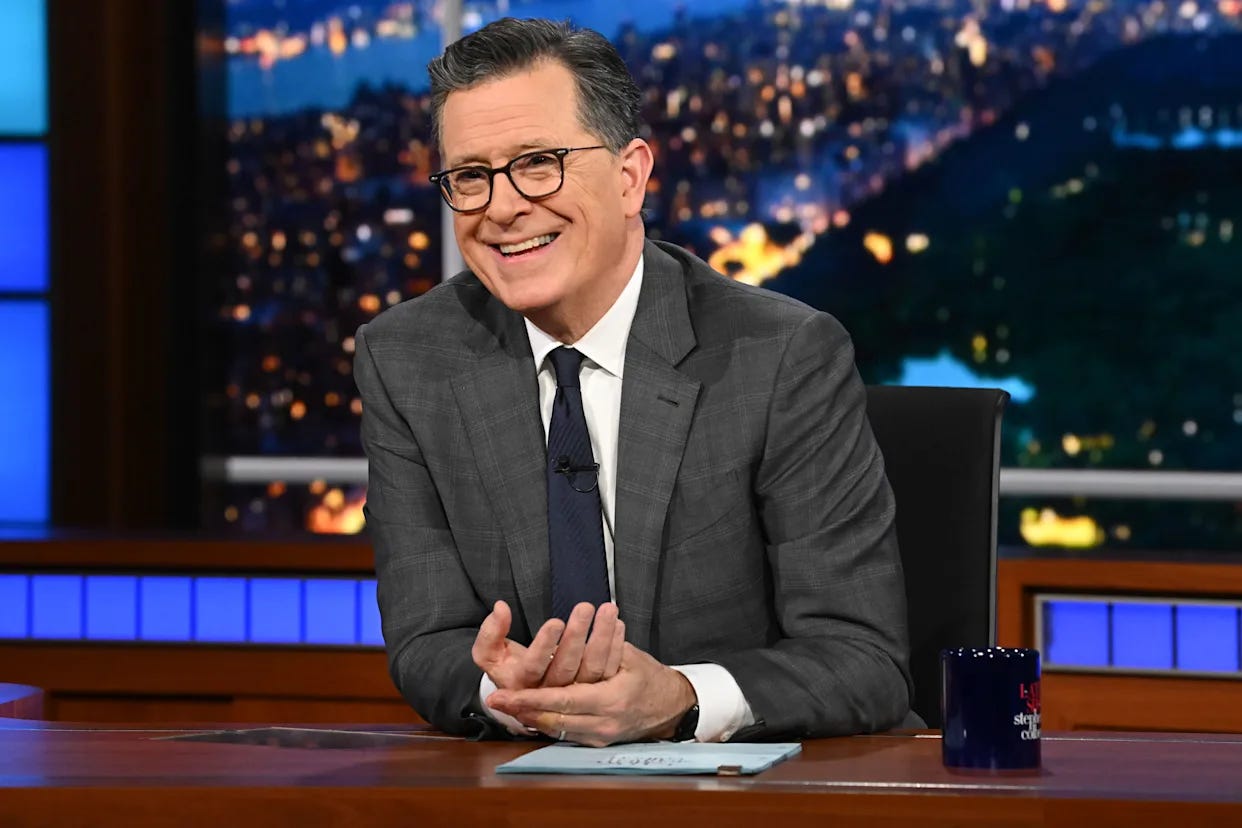
Tonight, The Late Show with Stephen Colbert will air its final episode after 11 years. It’s a blow to anyone who values free speech, expression, and the rights of all people to make their opinions heard.
This begs the question: why? Why did CBS cancel the top-performing late-night show just three years after feverishly trying to sign another contract with Colbert?
The answer is simple: corruption.
When CBS made the decision to cancel the show, they had just paid Donald Trump $16 million to settle a lawsuit and were in the midst of an $8 billion merger between Paramount and Skydance. Colbert criticized both moves, and then two days later had to announce that his show was being yanked off the air.
While the cancellation of Colbert is enough of a loss itself, it’s but the latest example in a long line of corrupt, behind-the-scenes deals for Trump’s benefit at our expense. Literally. We’ve been footing this guy’s bills for the last two years, and most of us don’t even realize it.
Given that there’s simply too many examples to list them all, here’s just a few:
This week Trump announced a $1.776 billion settlement with the IRS after his tax returns were leaked. This money is being put into what Trump is calling an “anti-weaponization fund” for insurrectionists, neo-nazis, and others who have been held accountable to the law. It’s really a bailout fund using your tax dollars.
In the first three months of 2026, Trump made over 3,700 stock trades, or more than 40 per day. Many of these trades were in companies like Nvidia, Lockheed Martin, and Palantir. Allegedly Trump keeps his assets in a blind trust. This “blind” trust is managed by … his sons. Hm. Definitely nothing sketchy going on there.
Trump has weaponized the Department of Justice to go after his political opponents like James Comey, Letitia James, and others. He’s gone so far as to install his personal attorney as the acting Attorney General after he fired Pam Bondi for not suppressing the Epstein Files well enough. Oops.
Despite the fact that these developments are morally and ethically repulsive, many people can look at them, get upset, and then move on, believing that it doesn’t affect them. It does.
Government corruption, whether glaringly obvious or subtly hidden, harms everyone. Using the Justice Department to attack those Trump doesn’t like has a chilling effect on the freedom of speech, of the press, and of other basic liberties. Corrupt stock dealings create impossible conflicts between corporations and the president because he is (allegedly!) supposed to be their chief regulator. And most importantly, every dollar that goes into some slush fund or another is one less dollar we can spend on childcare, healthcare, on tuition-free public university, or on literally anything else that might benefit regular people.
Young people, already shaken by a wildly unequal economy and lack of opportunity, see rules that are flexible, working one way for the rich and another way for us. We see accountability depending on who you know and how much you’re willing to pay. If it hasn’t already, normalizing such disparate treatment will erode the little faith we have in institutions’ ability to protect us at all.
These top-down rules, where the rich and well-connected conspire to benefit, result in higher rents and lower wages. In billionaire tax cuts while everyday goods get more expensive for the rest of us. In the young person who spends 4 years in college only to enter a job market where every “entry level” position now requires 5 years of experience (assuming the job still even exists in the age of AI decimation).
Corruption bleeds into every part of society, but hits young people the hardest.
The Late Show was pulled off the air because it had the courage to call out this rot. To call out what Trump would rather keep quiet. The end of the show isn’t just about a comedian losing a platform, but about more and more institutions deciding it’s safer and more profitable to obey and stay quiet.
For years, conservatives railed against online “cancel culture” that held powerful interests accountable for past actions (like sexual assault, racist remarks, and other things that we really shouldn’t look past). People like Elon Musk said we should “legalize comedy.” They praised the value of free speech. What they really meant was their speech.
Since retaking office, Trump has reappropriated cancel culture to silence his opponents and intimidate anyone who might think of speaking out. Its effects have been chilling.
Where institutions are choosing to capitulate, we must resolve to stand in the breach. To fight back, to speak out, and most importantly, to vote them out. We’ve done it before, and in 2026 and 2028, we’re going to do it again.
Good writing.