

In case you missed it, which you probably did, because cable news is dead, Jake Tapper is now broadcasting his hour-long slot on CNN from his office. With a podcast mic.
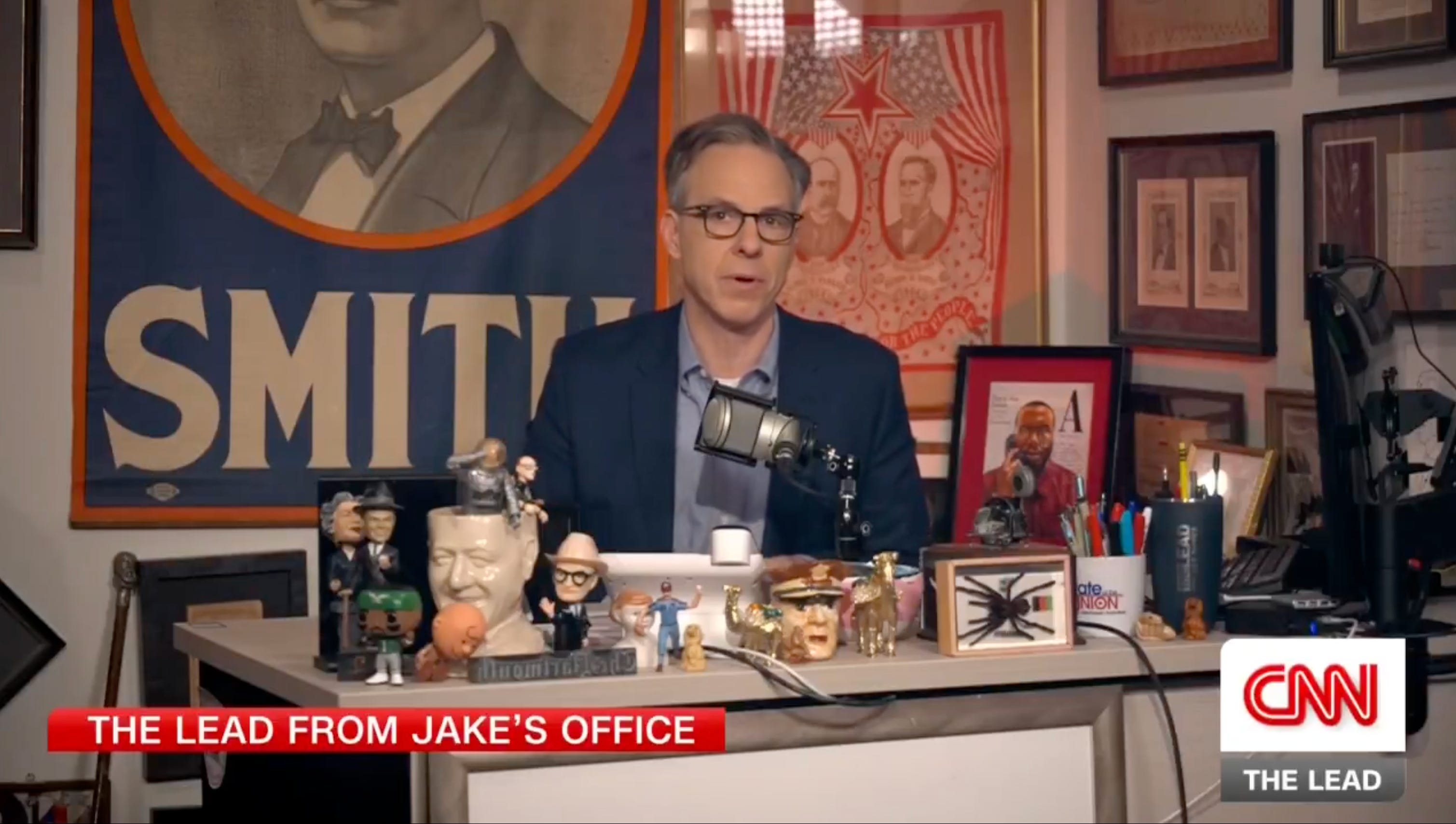
What this signifies is clear: cable news has decided that the solution to losing an entire generation of viewers is to cosplay as the thing that replaced them.
The problem is that the cable executives fundamentally don’t understand why podcasters beat them.
You can put Jake Tapper behind a microphone in a cluttered office over and over again, but it won’t make him feel like Joe Rogan, or Alex Cooper, or Carlos Eduardo Espina, or literally anyone else Gen Z actually watches. Because what those creators have, and what no amount of production and set design can manufacture — is the feeling that you’re getting an unfiltered, unscripted version of what someone actually believes.
Cable news is, by design, the opposite of that. It is scripted, lawyered, produced, and planned, down to the second. It has advertisers to protect. It has relationships with investors to maintain. (And if you’re CBS, it’s a relationship with the Ellisons and Trump himself.) It cannot “go there,” because “there” is exactly where its endgame interests prevent it from going. The podcast mic behind the desk is not a format change. It’s a costume.
The same principle applies in progressive politics. We see more moderate candidates copying the same style of online videos that worked so well for Zohran Mamdani, thinking it’s the magic formula that will work for them too. But a generation raised with sky-high screen times and parasocial relationships galore have a preternatural ability to detect a politician’s lack of authenticity.
Young people today follow creators who swear, who change their minds on air, who admit when they get something wrong, who don’t cut to commercial the minute things get uncomfortable. Gen Z wants to see human error, because in an era where anyone can make anything look real, they’re a generation with a lot of built-in cynicism. That cynicism applies directly to media institutions and legacy politicians.
Progressives and media figures alike will have to do a lot more to win this generation. That includes genuinely investing time and energy into online-first strategies, not just putting a bow on a legacy format and hoping nobody looks closely enough to tell.
He looks so out of place and staged. I’m still waiting for his book on Trump’s dementia, slow walking, slurring and hallucinations.
He needs to go. He totally demoralized Biden and supports this crazy administration