
The Takeaway: Donald Trump’s clash with Pope Leo XIV didn’t break through because of policy or rhetoric, but because of a meme.
What Went Down: After escalating attacks on the Pope, Trump posted (then deleted) an AI-generated image of himself as Jesus Christ, triggering vociferous pushback from his own base.
Why This Hit Differently: Trump has often survived controversy by keeping things ambiguous. This wasn’t. The image made the implication unavoidable.
What It Reveals: In 2026, politics is visual. Images stick and reshape how everything else is understood.
The Bottom Line: By turning himself into the image critics had long warned of, Trump exposed a real limit. Not of politics, but of the internet itself.
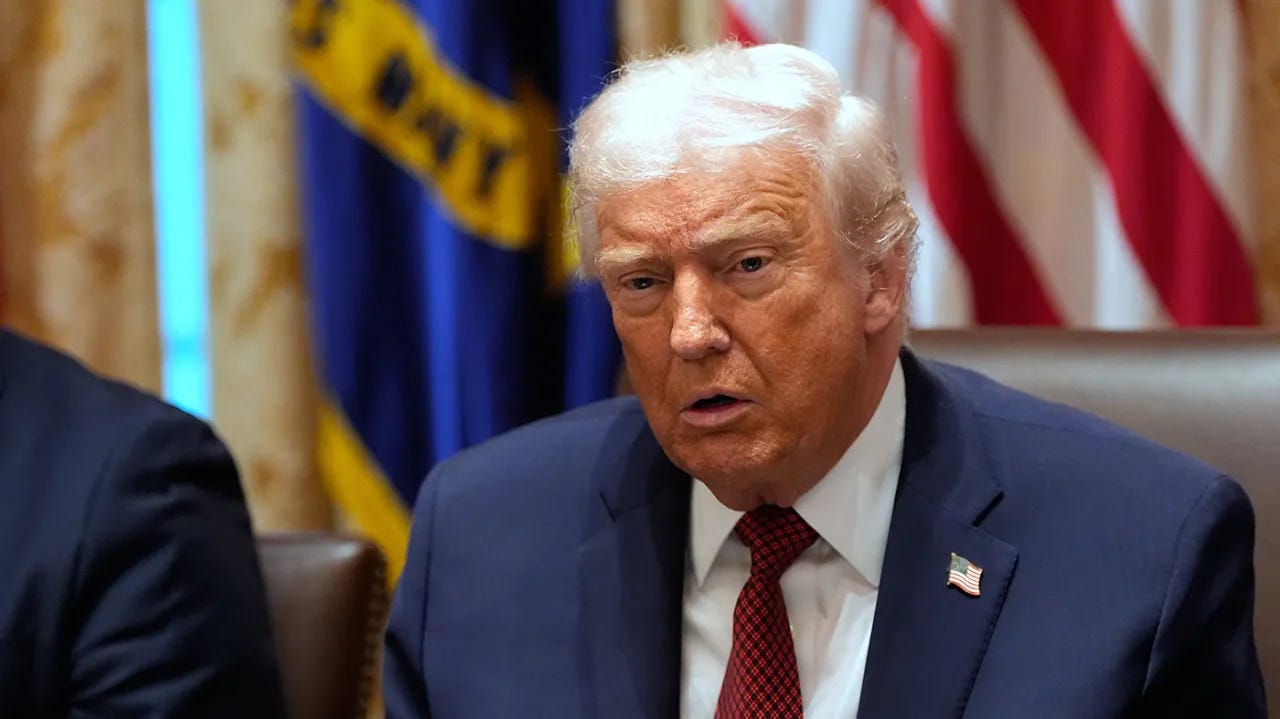
Since taking office 15 months ago, Donald Trump has rarely faced a single opponent strong enough to resist his intimidation.
Not in Congress, where Republican sycophants have fallen in line and where Democrats lack the power, and in some cases the will, to resist. Not in the courts, where the Supreme Court has served as a rubber stamp on the vast majority of his policies. Not in the media, where corporate monopolization has led to the marginalization of once-venerated journalists seeking to speak truth to power.
Enter Pope Leo XIV.
Following a series of subtle but public rebukes of Trump’s policies, Trump massively escalated the feud by posting a rant railing against the American Pope on his Truth Social account and an AI-generated image of himself as Jesus Christ.
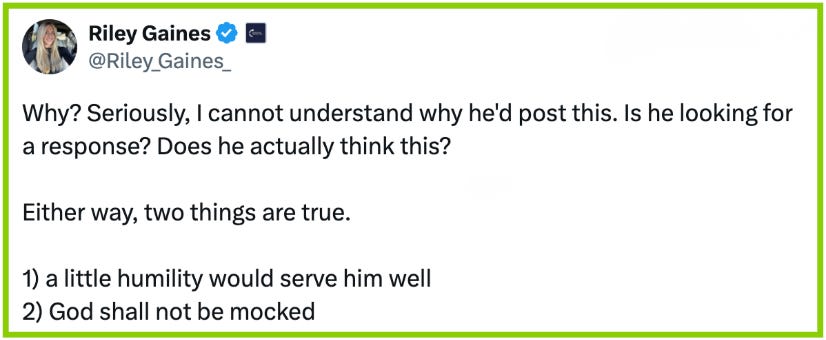
Interestingly, that image, or what Trump has since said was “supposed to be me as a doctor,” is what broke through more than anything. Trump’s blasphemous statements and actions alone are sufficiently disqualifying, but it wasn’t until he portrayed himself as Christ Almighty, descended from on high as the ultimate healer, did enough of his own supporters finally say the quiet part out loud: this shit is weird. (and that’s an understatement).
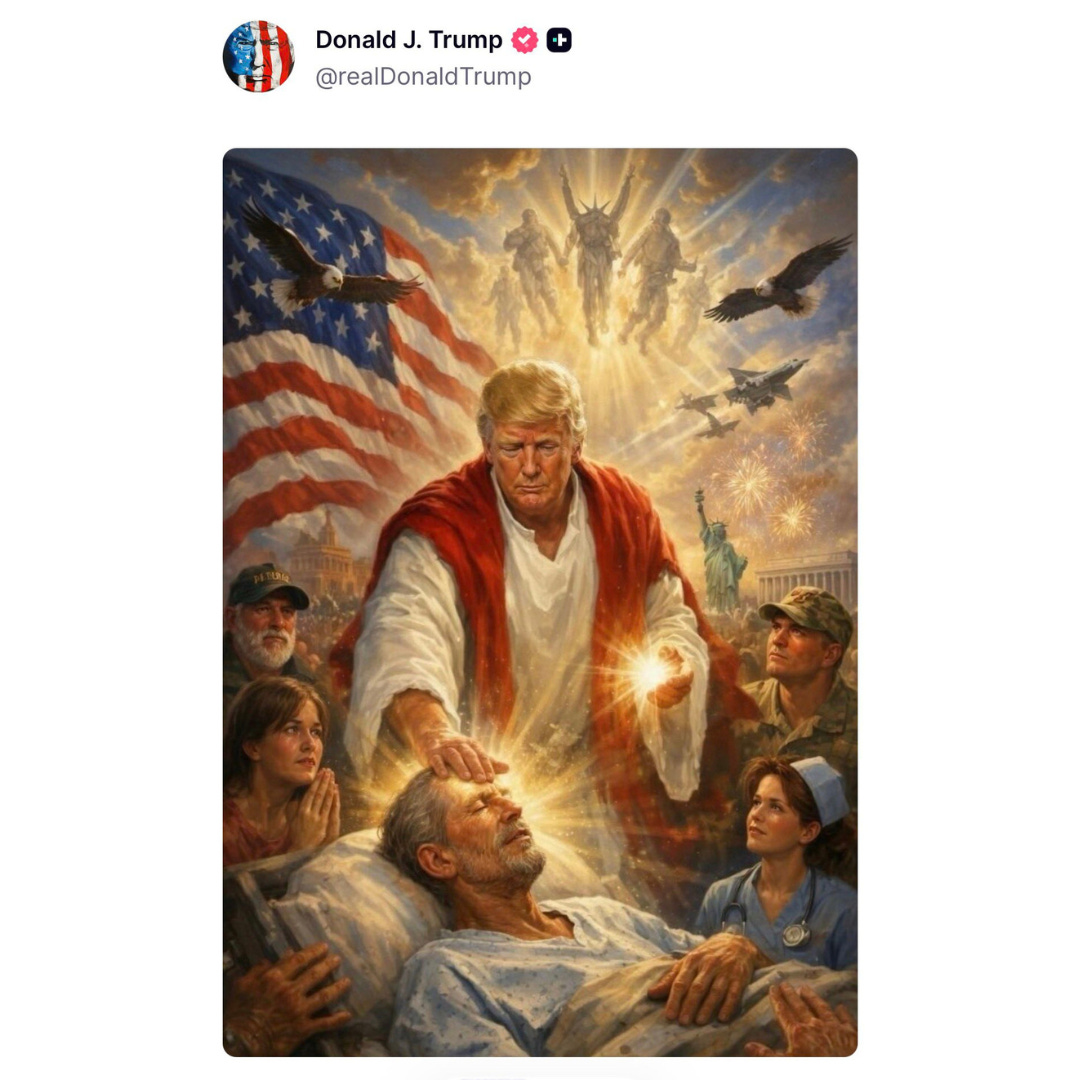
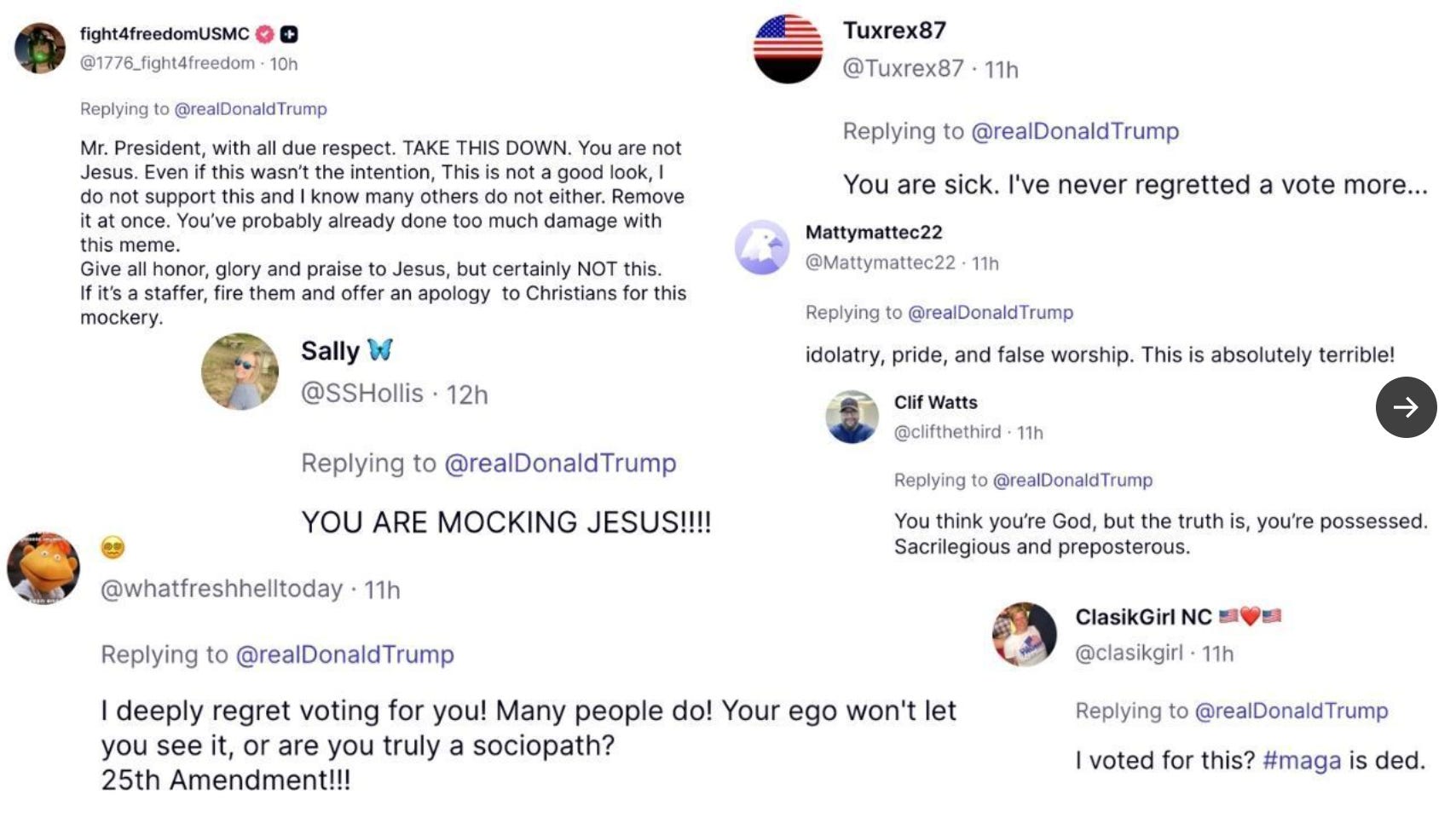
In an embarrassing sign that even he knows he went too far, Trump has since deleted the image in response to blistering criticism from across the political and religious spectrum, particularly from some of his most ardent supporters.
Trump has long trafficked in what would traditionally be considered blasphemous political behavior. He’s invoked God to justify his wars of choice, surrounded himself with pastors who compare him to Jesus, and actively encouraged rhetoric that frames him as divinely chosen.
Despite these brazen offenses, his support among evangelical Americans continued unruptured.
That all changed with Trump’s self-portrayal.
For many Christians, even those who consider themselves MAGA or supporters of Trump, his attempted embodiment of Christ was a step too far, and pitted Trump against their religion.
Even though Trump may think differently, he cannot win a fight with God.
To understand why, you have to understand what made this clash different, and why Pope Leo XIV, of all people, became the one figure capable of exposing the limit.
The answer, actually, is rather simple: politics is no longer primarily verbal, but visual.
Increasingly, politicians have begun to realize that they can say almost anything. Their supporters will rationalize it, reinterpret it, or simply scroll past it. Our words have become elastic, and have the shelf-life of curdled milk.
Images, however, are permanent.
An image collapses the distance between implication and reality. It forces an audience to confront what something actually looks like, not merely what it can be spun into.
In other words, images are seared into our minds. We don’t have to physically see them to recall what they looked like, how they made us feel, and in Trump’s case, how they violated the beliefs of Christians across the globe.
Trump didn’t merely suggest divine authority, but rendered it.
In doing so, he stripped away the last vestige of ambiguity that had protected him from the truth we all already knew: Trump views himself as God-like, and at least on Earth, sees no equal to himself. Not even the Pope.
To be clear, this isn’t the first time Trump has done something amoral, beyond-the-pale, or otherwise disgusting.
What’s changed is how American politics has become increasingly memetic. Visuals have become far more compelling, and far-reaching, than words.
That’s why videos of the cold-blooded killings of two American citizens by ICE fundamentally changed the conversation on immigration enforcement.
On more than one occasion, he’s surrounded himself with loyalists who have prayed over him. He’s posted photos of himself as the Pope (this is when he was still content to be God’s emissary, though he now seems to be aspiring to be God himself).
Such images have gone viral before. Evangelical leaders have touted them as proof that Trump has been sent by God and is a part of his broader plan for the United States.
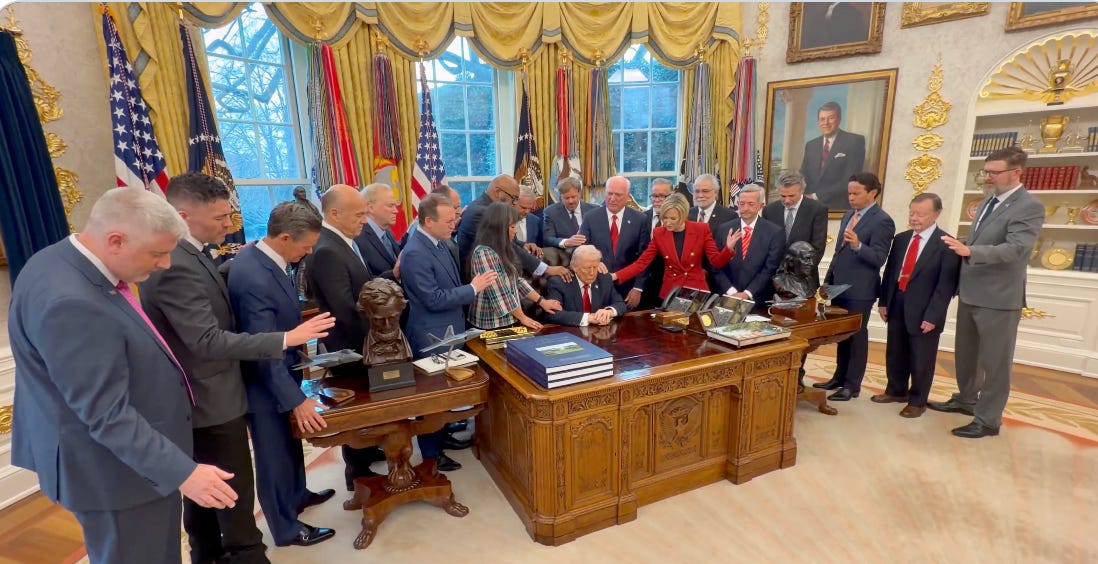
Trump as Jesus, however, is much more revealing of the psyche he’s inhabited all along. Rather than being sent by God, Trump attempted to position himself as God. Such a position places him fundamentally at odds with the Pope and with Christian teachings, making a conflict inevitable.
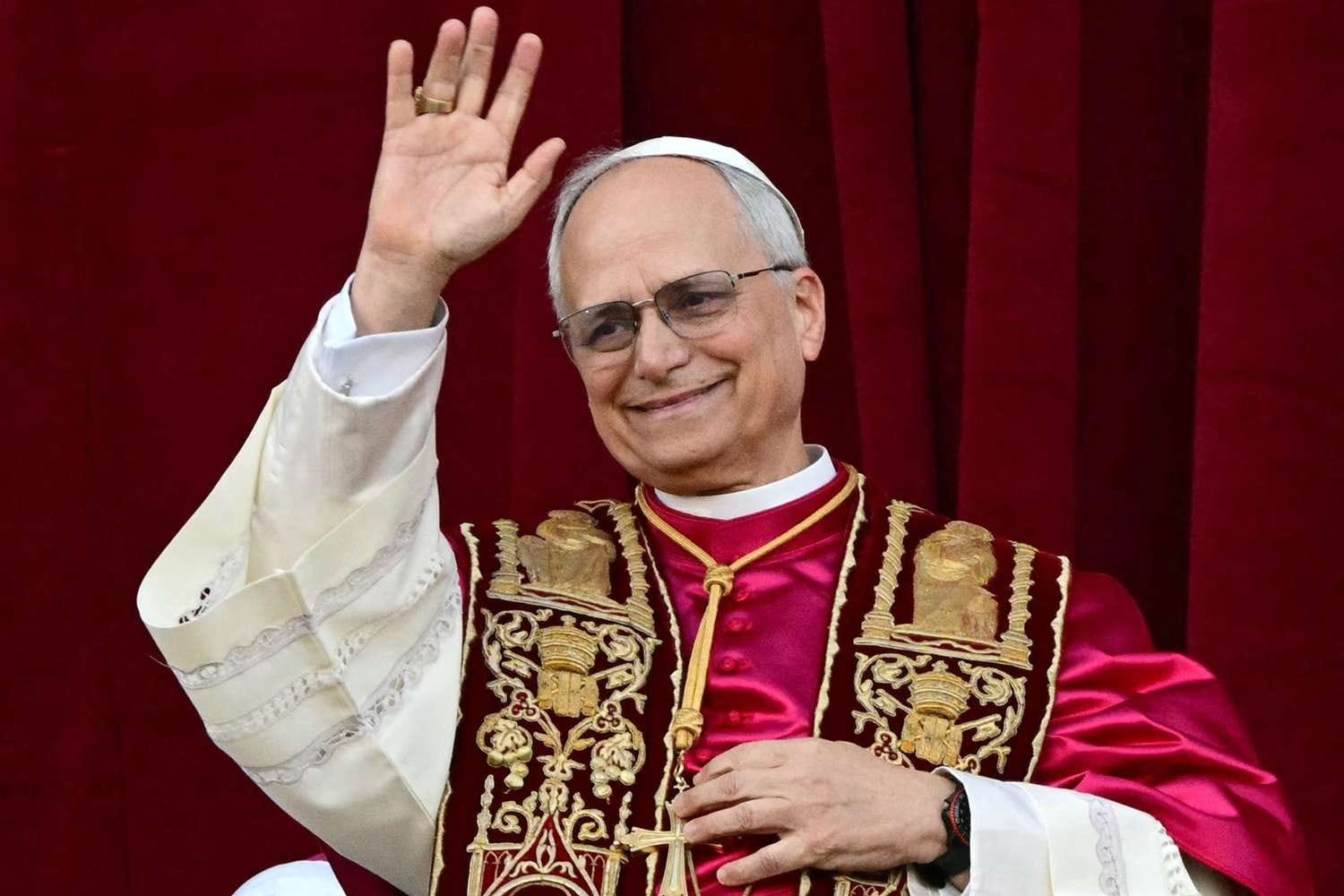
However, where Trump is political, Pope Leo is cultural.
Where Trump has escalated, Pope Leo has reframed. Where Trump insults, the Pope indicts. His criticisms have been moral, not partisan. In his statements, the Pope has warned against leaders consumed by a “delusion of omnipotence,” against the weaponization of religion, and against the idea that strength alone confers righteousness.
Pope Leo’s unique position, as someone of America yet simultaneously a leader of one of the world’s largest religions, adds more weight. His statements, made almost exclusively in his native English, have also helped reach millions more Americans than might have otherwise. Pope Francis, who made similar calls for peace during his pontificate, failed to reach many of these Americans due to that language barrier.
In full, where Trump has sought to attack Pope Leo in the same way he attacks any political opponent, the Pope has criticized Trump’s misappropriation of theology.
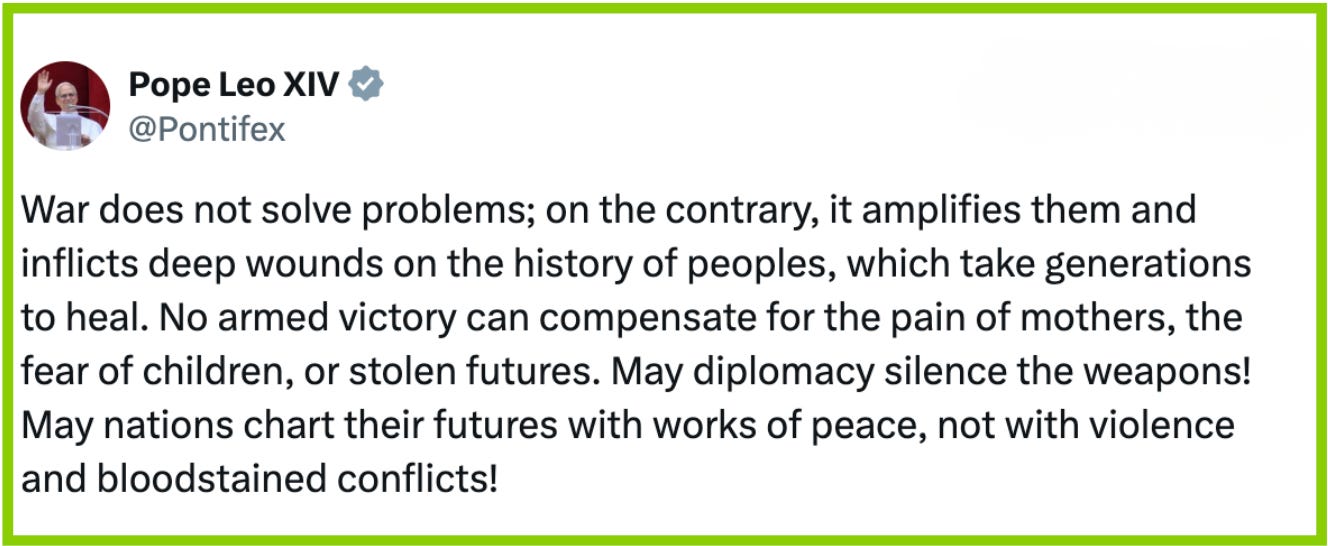
Instead of rebutting that argument, Trump visualized it.
In doing so, he didn’t just cross a political line, but a religious one, confirming the very critique that Pope Leo had been making all along.
At its core, the Pope’s warning was about idolatry far more than policy.
That’s why this moment matters. Not because it’s shocking, but because it’s clarifying. For millions of Americans who have spent a decade rationalizing Trump’s statements to mean something other than what he obviously meant, there is finally no recourse.
For years, the lesson of Trump-era politics has been that there are no limits. That everything can be absorbed, spun, or memed into submission.
In Pope Leo’s triumph over Trump, that conclusion was proven incorrect.
Limits do exist, they just look different than how we thought. More than anything, that limit is on what can be seen.
For the first time in a long time, thanks in no small part to Pope Leo XIV, the image made the truth impossible to look away from.
Democratic Communication could create a series of patriotic themed memes.
Use their own propaganda campaign for the benefit of democratic values. We care about you because we are you.
The hillarity of suggesting the Pope is "soft on crime" and wants Iran to have nukes is emblamatic of his complete disconnect from reality and total misunderstanding of who or what the Pope is... I mean, REALLY?