

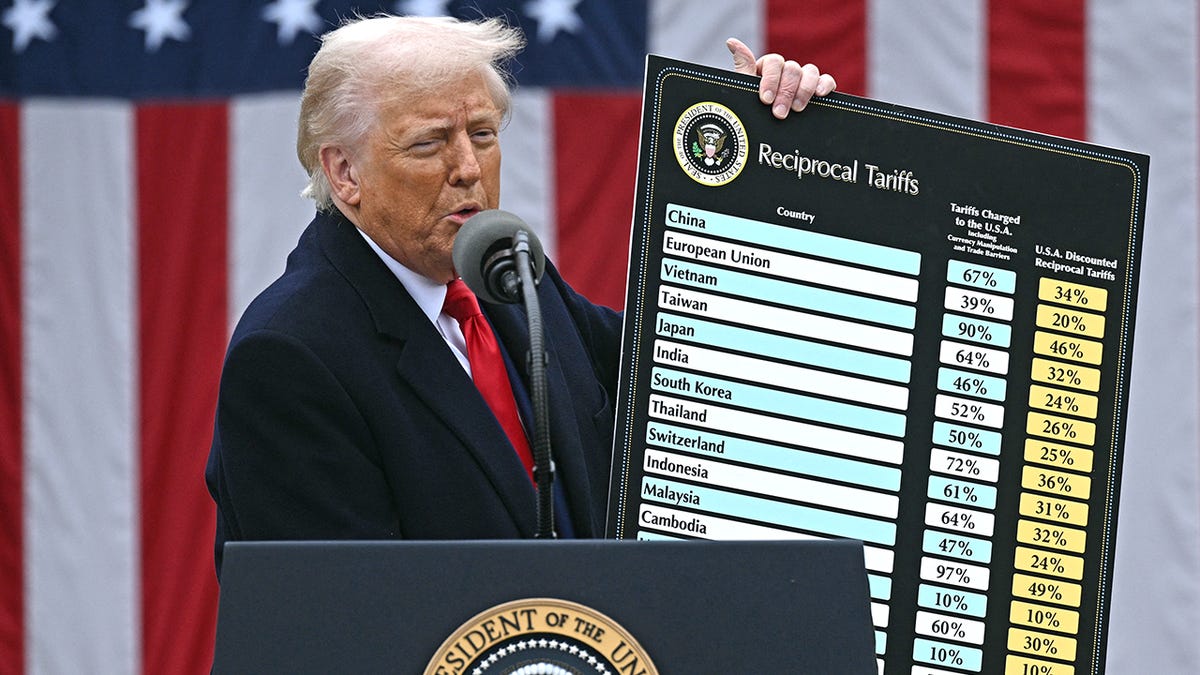
Once upon a time, you could count on Donald Trump to rail against socialism and hold up China as the ultimate avatar of an extremist, authoritarian government drunk on power and indifferent to the needs of its people.
And yet, that description seems more fitting for the state of our own government today. Over the last decade, Trump’s governing philosophy has increasingly embraced the very abuses of power, political interference, and corruption he has spent years condemning abroad.
At the same time, he’s sought to manipulate Americans’ fear of living under the spectre of socialism as a means to prevent Democrats from gaining power in Washington.
Look no further than the cascading, compounding controversies at Nvidia to see just how far this Republican Party has jettisoned their free market, small government principles.
We’re sure many of you are aware of the recent firestorm engulfing Nvidia’s on-again-off-again CEO, Jensen Huang (if not, you can read about it here). The short and sweet of it is: Huang, a married father of two, carried on affairs with two (or three? or four?) women, at least one of which has now been revealed to be an asset of the Chinese Communist Party. To add insult to injury, his booty call’s shell company has funneled hundreds of thousands of otherwise blacklisted processing chips to China while potentially accessing and leaking a yet-unknown amount of highly classified information of vital importance to America’s AI and computer processing industries to China as well.
Following the revelations, Huang resigned as CEO of Nvidia.
For all of 13 days.
On Monday, despite just days before saying it would never happen, Nvidia’s board voted unanimously to reinstate Huang as CEO.
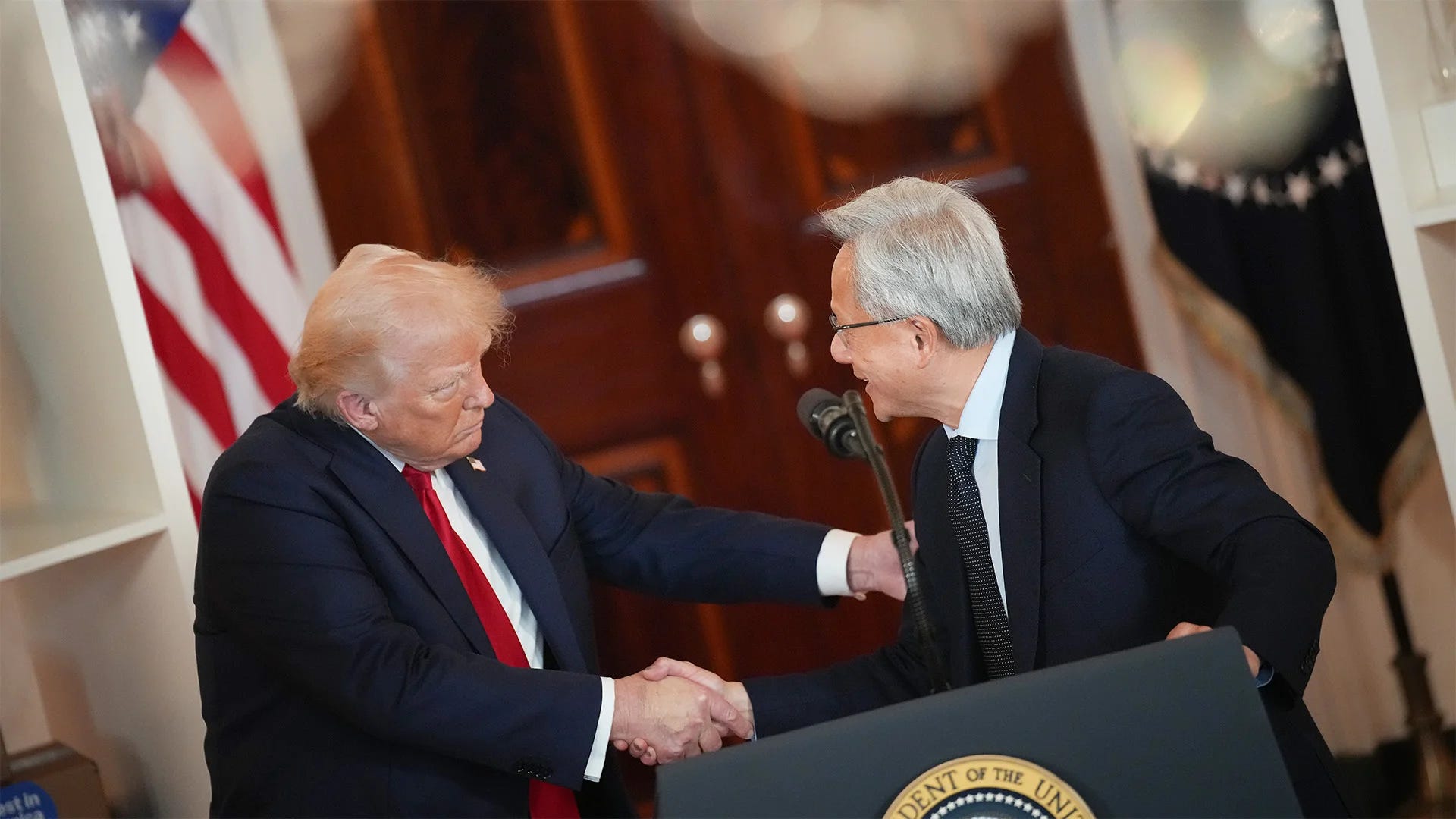
This would be a very peculiar development indeed if not for one crucial detail: Donald Trump and his administration were directly involved in pressuring the board to bring Huang back – even going so far as to have Trump “represented” at the very board meeting where they voted to reinstate Huang as CEO (though Trump refused to confirm whether he had personally called in).
Read that back.
The President of the United States personally intervened in the leadership decisions of a private American company with a market capitalization in the trillions – forcing a decision that both sides have said wouldn’t have come to pass without direct federal pressure.
We can leave the most obvious arguments — that Huang is a national security risk, that a man so reckless in his personal life is bound to carry that attitude into his professional life, and so on — to legacy media, which has already covered those aspects extensively.
What’s being missed in the salacious sex scandal, though, is how Trump has intertwined political power and private enterprise in a way unseen in American history and in precisely the same things he’s spent years condemning China’s economic and political system for. At the same time, Trump and his MAGA Republicans have shirked oversight, ignored accountability, and adopted the same tactics of suppressing dissent and controlling information that allow the CCP’s dictatorship to survive.
He and his allies have deployed ICE onto America’s streets, terrorizing communities and killing citizens and noncitizens alike. He’s given no-bid, sweetheart deals to his allies using federal dollars. He’s swung a wrecking ball across America, knocking down whatever he doesn’t like (in some cases quite literally, à la East Wing). He’s labeled media organizations like ourselves “media offenders” and enemies of the people.
And he’s done all of this without so much as a whisper from the Republican Congress.
Under Trump, the United States has come very close to becoming the very thing we’ve always stood against: a top-heavy, authoritarian society where dissent is crushed and the pillars of government serve to reinforce one another’s authority rather than serve as the necessary checks and balances required for a free and fair society.
Whether you’re on the left, the right, or somewhere in between, there’s a broad consensus that one of the great promises of America is that anyone can come from anywhere and become anything; that your business can operate independently of political pressure; that government officials are accountable to the public (not wealthy magnates or shareholders);and that no individual can wield unchecked power over the institutions and industries that shape our economy.
But just like consent, those principles are negotiable for Trump.
Today, it was Trump directly leveraging federal power to force a company to rehire a damaged, dangerous executive purely because of a personal relationship between the two. But 13 months ago, it was the Pentagon – at Trump’s direction – taking a 10% stake in Trilogy Metals. 14 months ago, it was the Energy Department taking a 5% stake in Lithium Americas. 15 months ago, it was Nvidia and AMD being forced to give 15% of revenues from chip sales to China to the U.S. government at the same time as we took a 10% stake in Intel. 16 months ago, it was the Pentagon putting $400 million into MP materials and becoming its largest shareholder. And 17 months ago, it was Trump demanding veto power over corporate decisions made by U.S. Steel.
In involving the federal government in so many different companies, Trump has created an economy where success doesn’t depend on what you build, how well you compete, or how many people you employ, but on who you know in Washington. Ultimately, when the government becomes an instrument for rewarding friends and punishing everyone else, the American people lose. The free market stops being free, public money stops serving the public, and the promise that anyone can make something of themselves becomes an impossible fantasy.
“Big government” as a concept isn’t bad; after all, it was big government that ended the Great Depression; big government that passed the Civil Rights and Voting Rights Acts; big government that expanded access to healthcare for tens of millions of Americans. The danger arises when big government isn’t used to lift people from poverty or expand opportunity but to reward lackeys and help the rich get richer while we all grovel for scraps.
The truth is that today’s Republican Party doesn’t oppose big government; it opposes government that doesn’t serve its interests or that of their billionaire donors. It has no problem weaponizing federal power to punish political opponents, reward moneyed allies, silence critics, or consolidate control. In doing so, it hasn’t only abandoned the idea of small government, but the idea that government should be accountable to the people it serves.
And make no mistake: while Trump has led the charge, rank-and-file Republicans have backed him every step of the way. While Trump may be in his final years in office, his ideology, worldview, and anti-American lust for power is alive and well. No matter who follows him, you won’t have to wonder whether they’d do the same, because they already have.
But for all the fear and division this administration has tried to manufacture, Americans are still capable of imagining something better. We still believe that we don’t have to make America more like China to compete with them. We don’t have to make America more authoritarian to make it strong. And we certainly don’t have to abandon the principles that made this country exceptional to make it great again.